
Call: 08045477360
 Send Inquiry
 Send Inquiry
Manual Fuel Cell Test Station with Electronic Load Bank
Manual Fuel Cell Test Station with Electronic Load Bank Specification
- Product Type
- Manual Fuel Cell Test Station with Electronic Load Bank
- Usage
- Laboratory and research fuel cell testing applications
- Material
- Stainless Steel and Aluminum Alloy
- Capacity
- Up to 200W (adjustable)
- Nominal Capacity
- 0-20A continuous
- Terminal
- 4mm Banana Socket
- Sealed Type
- Not Applicable (Manual Open-Test System)
- Voltage
- 0-30V DC (adjustable)
- Surface Finishing
- Powder Coated / Anodized
- Board Thickness
- 4 mm
- Size
- Standard / Customizable
- Dimension (L*W*H)
- 650mm x 500mm x 350mm
- Weight
- Approximately 28 kg
- Safety Features
- Overcurrent, Overvoltage, Emergency Stop Switch
- Compliance
- CE Certified (on request)
- Flow Control
- Manual rotameters for anode & cathode gas flow
- Load Bank Type
- Electronic, Programmable DC Load
- Connections
- Quick plug gas and electrical connectors
- Display
- Digital panel meter for Voltage, Current, Power
- Color
- Silver & Blue finish
- Power Input
- AC 220V, 50Hz, single phase
- Humidification
- Built-in humidifier module (manual control)
- Accessory Ports
- Data logging USB/Serial, External sensor ports
- Control Method
- Manual (Analog Knobs & Switches)
- Supported Fuel Cell Types
- PEM, DMFC, Alkaline (H2, Air, Methanol, etc.)
- Temperature Control
- Integrated heater with PID temperature controller (ambient to 120°C)
About Manual Fuel Cell Test Station with Electronic Load Bank
Fuel Cell Test Station
Fuel Cell Test Station is a highly efficient and durable system which is designed for the testing of man different types of power cells with excellent performance. It is manufactured by using top quality machine elements and electronic equipment which ensures higher reliability and durability. This industrial unit gives controlled action to easily adjust flow, temperature and pressure for both anodic as well as cathodic gases. It is equipped with highly calibrated instruments that provides accurate and precise results.
Precision Control for Laboratory Testing
This fuel cell test station offers manual, analog control over all critical parametersincluding gas flow, temperature, and humidificationvia rotameters, PID controllers, and intuitive knobs. Its digital displays deliver real-time readings for voltage, current, and power, enhancing accuracy while providing direct feedback during testing.
Versatile Compatibility and Safety
Supporting multiple fuel cell chemistries, such as PEM, DMFC, and alkaline, the station adapts to varied research requirements. Built-in safety mechanisms like overcurrent/overvoltage protection and an emergency stop ensure operational reliability, while CE certification can be obtained for compliance with international standards
Easy Integration and Customization
Flexible accessory ports for data logging and external sensors allow for seamless integration into existing laboratory setups. The systems modular design enables custom sizing and configurations, suiting both standard and specialized applications. Sturdy, powder-coated construction delivers longevity in research environments.
FAQs of Manual Fuel Cell Test Station with Electronic Load Bank:
Q: How do I operate the Manual Fuel Cell Test Station with Electronic Load Bank?
A: To operate the test station, use the manual analog knobs and switches to adjust the electronic load banks voltage and current. Set gas flows for both anode and cathode through the integrated rotameters, and regulate temperature with the PID controller. Real-time monitoring is provided through the digital panel meters.Q: What types of fuel cells can be tested with this station?
A: This system supports Proton Exchange Membrane (PEM), Direct Methanol Fuel Cell (DMFC), and alkaline fuel cells, with compatibility for various gases such as hydrogen, air, and methanol, ensuring flexibility in research and development projects.Q: When is the integrated humidifier module used and how is it controlled?
A: The built-in humidifier module is employed when humidification of feed gases is required for specific experiments. It operates via manual controls, allowing users to adjust humidity levels to meet the conditions necessary for accurate fuel cell testing.Q: Where can this test station be installed or used?
A: Designed primarily for laboratory and research applications, the system is suitable for installation in research institutions, universities, industrial facilities, and any settings engaged in fuel cell testing or development.Q: What is the process for data logging and external sensor integration?
A: Data can be logged using the stations USB or serial accessory ports. External sensors may be connected through dedicated ports, facilitating detailed data acquisition and enabling users to track performance metrics during experiments.Q: How does the station ensure operator safety during fuel cell testing?
A: Safety features include overcurrent and overvoltage protection mechanisms, as well as an emergency stop switch for rapid shutdown. The system can be supplied with CE certification upon request, verifying its compliance with recognized safety standards.Q: What benefits does the manual control design offer in research settings?
A: Manual control using analog knobs and switches allows researchers to easily and precisely adjust test parameters in real time. This flexibility supports hands-on experimentation and rapid optimization of fuel cell performance under varying conditions.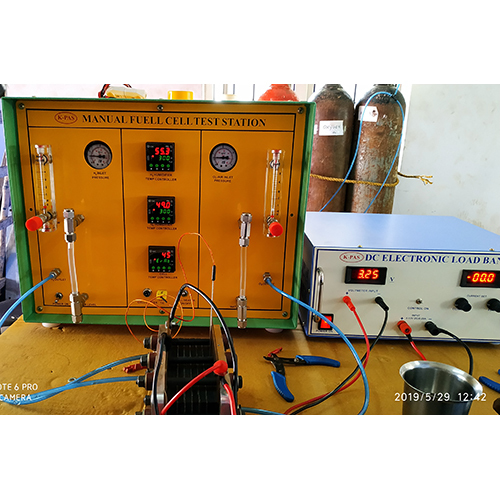
Tell us about your requirement

Price:
Quantity
Select Unit
- 50
- 100
- 200
- 250
- 500
- 1000+
Additional detail
Mobile number
Email

More Products in Fuel Cell Category
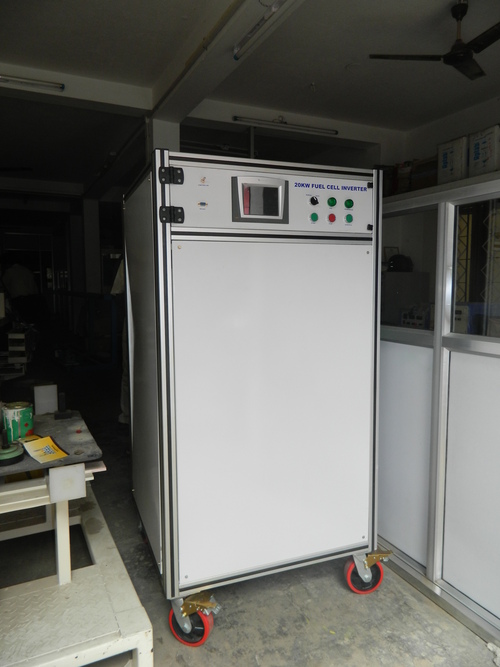
20 KW Fuel cell inverter
Minimum Order Quantity : 1 ,
Size : Standard
Sealed Type : Other, Sealed, Weatherproof Enclosure
Surface Finishing : Powder Coated
Dimension (L*W*H) : 1200 mm x 800 mm x 2000 mm
Product Type : Fuel Cell Inverter
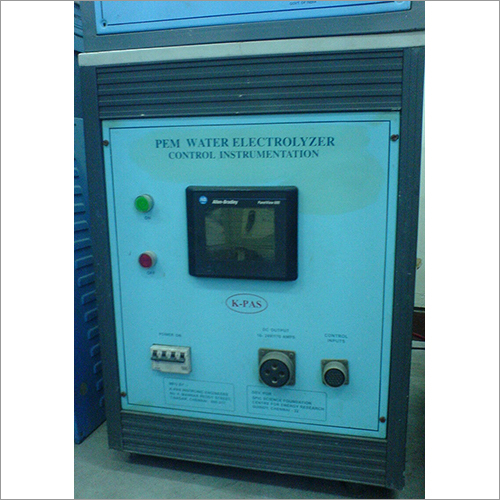
PEM Fuel Cell Test Station
Minimum Order Quantity : 1 Number
Size : Standard/Customizable
Sealed Type : Other, Sealed Cabinet with Viewing Window
Surface Finishing : Powder Coated/Anodized
Dimension (L*W*H) : Approx. 700 mm x 500 mm x 450 mm
Product Type : PEM Fuel Cell Test Station
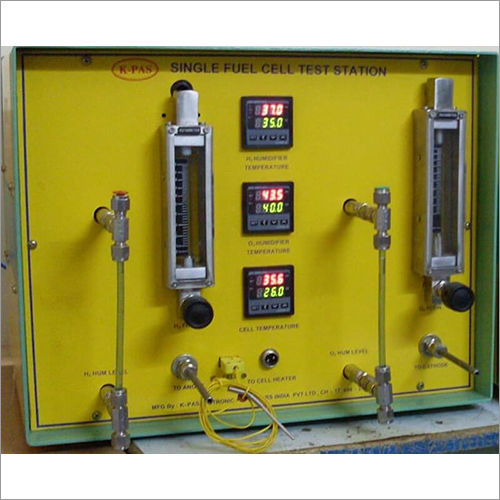
Manual Operated Single Cell Fuel Test Station
Size : Standard Lab Bench Size
Sealed Type : Other, Sealed Test Chamber
Surface Finishing : Powder Coated / Polished
Dimension (L*W*H) : 450mm x 300mm x 350mm
Product Type : Manual Operated Single Cell Fuel Test Station
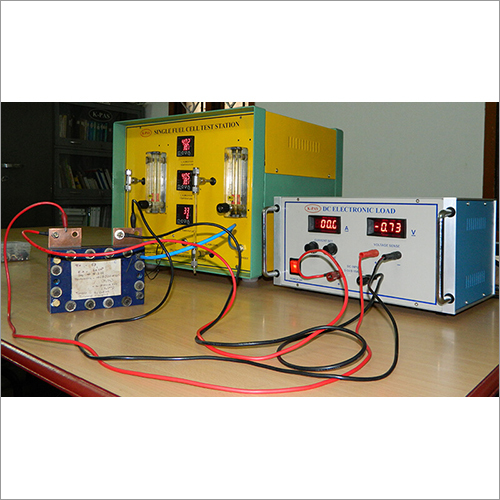
Manual Fuel Cell Test Station with DC Electronic Load Bank
Size : Medium Benchtop Station
Sealed Type : Other, Openaccess design (not sealed)
Surface Finishing : Powdercoated corrosion resistant finish
Dimension (L*W*H) : Approx. 650 x 450 x 400 mm
Product Type : Manual Fuel Cell Test Station with DC Electronic Load Bank

Contact Details
K-PAS INSTRONIC ENGINEERS INDIA PVT. LTD.
GST : 33AADCK6611R1Z8
- No.16, Mabel Avenue, Sri Sai Nagar Extension, Thoraipakkam, Near Chennai One Toll Gate, Chennai - 600097, Tamil Nadu, India
- Phone :08045477360
 Send Inquiry
Developed and Managed by Infocom Network Private Limited.
