
Call: 08045477360
 Send Inquiry
 Send Inquiry
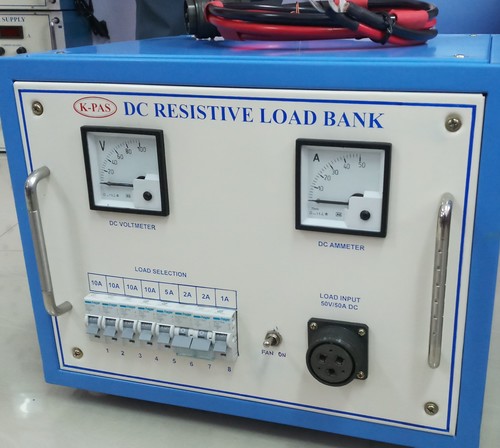
Programmable DC Electronic Load Bank
MOQ : 1 Piece
Programmable DC Electronic Load Bank Specification
- Product Type
- Programmable DC Electronic Load Bank
- Power
- Up to 6000W or as specified
- Frequency (MHz)
- DC Only (No Frequency)
- Working Temperature
- 0C to 40C
- Speed Regulation Method
- Microprocessor Controlled
- Noise Level
- <55 dB
- Dimension (L*W*H)
- 480 mm x 540 mm x 220 mm (approx.)
- Color
- Gray & Black
- Current Range
- 0120A (depending on model)
- Overvoltage Protection
- Yes
- Remote Sensing
- Supported
- Load Modes
- CC, CV, CR, CP, CC+CV, CR+CV
- Overcurrent Protection
- Yes
- Voltage Range
- 0500V DC (depending on model)
- Control Method
- Programmable by PC or Panel
- Data Logging
- Supported
- Short Circuit Protection
- Yes
- Display
- Digital LCD Touchscreen Display
- Application
- Battery, Power Supply, and Electronics Testing
- Operating Humidity
- 80% RH
- Cooling System
- Intelligent Fan Cooling
- Accuracy
- Voltage: 0.05%+0.01%FS; Current: 0.1%+0.02%FS
Programmable DC Electronic Load Bank Trade Information
- Minimum Order Quantity
- 1 Piece
- Supply Ability
- 10 Pieces Per Day
- Delivery Time
- 1 Week
About Programmable DC Electronic Load Bank
Load bank :

Our organization is engaged in offering a superior quality range of Load Banks. These banks are manufactured under the guidance of expert professionals, who make sure to use high-grade raw material in the manufacturing process.
Owing to their portability, these banks are used for laboratory and manufacturing usage. Moreover, the banks offered by us deliver output current at a medium-high voltage. Along with this, the banks offered by us are also known for their precision constant and voltage steady.
Advanced Load Modes for Versatile Testing
Choose from constant current (CC), constant voltage (CV), constant resistance (CR), constant power (CP), and mixed modes for granular testing control. These options make it ideal for validating batteries, power supplies, and electronic circuits in R&D and quality assurance.
Precision Control and Reliable Protection
Benefit from programmable controls via PC or the front panel, ensuring tailored test sequences. Built-in overvoltage, overcurrent, and short circuit protections safeguard both the device and your components during operation, enhancing test safety and reliability.
Data Logging and Remote Sensing Capabilities
Track and store detailed test data with integrated logging functionality. Remote sensing ensures measurement accuracy by compensating for lead losses, allowing more precise voltage and current assessments during every test cycle.
FAQs of Programmable DC Electronic Load Bank:
Q: How can I program the DC electronic load bank for specific test requirements?
A: You can program the load bank either directly from its intuitive LCD touchscreen panel or remotely via a connected PC. Software provided by the manufacturer allows you to set various test parameters, automate sequences, and monitor real-time data for tailored testing.Q: What types of protection features does this load bank provide?
A: This electronic load bank includes multiple safety mechanisms: overvoltage protection, overcurrent protection, and short circuit protection. These ensure your devices and the load bank are safeguarded during unexpected surges or faults.Q: When should I use the remote sensing feature, and what are its benefits?
A: Remote sensing is recommended when you need precise voltage measurements at your device under test (DUT), especially if there are significant cable lengths or resistance. It compensates for voltage drops in the leads, ensuring more accurate test readings.Q: Where can this programmable load bank be used effectively?
A: It is well-suited for laboratories, manufacturing quality control, R&D environments, and servicing centers where testing of batteries, power supplies, and electronic modules is required. Its robust build and flexible features make it suitable for professional settings.Q: What is the process for data logging and reviewing test results?
A: The load bank incorporates data logging, allowing you to automatically record test results during operation. These records can be viewed and exported for analysis, simplifying compliance and reporting tasks.Q: How does the intelligent fan cooling system operate?
A: The unit features an intelligent fan cooling system that dynamically adjusts fan speed based on temperature and load conditions, maintaining optimal cooling while keeping noise below 55 dB for a quieter workspace.Q: What advantages does microprocessor control offer for speed regulation?
A: Microprocessor-controlled speed regulation delivers highly accurate and consistent loading responses. It enables precise adjustments, enhances operational reliability, and increases efficiency during dynamic and static test conditions.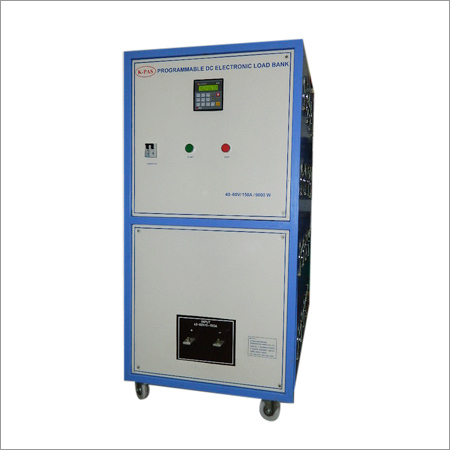
Tell us about your requirement

Price:
Quantity
Select Unit
- 50
- 100
- 200
- 250
- 500
- 1000+
Additional detail
Mobile number
Email

More Products in Resistive Load Bank Category
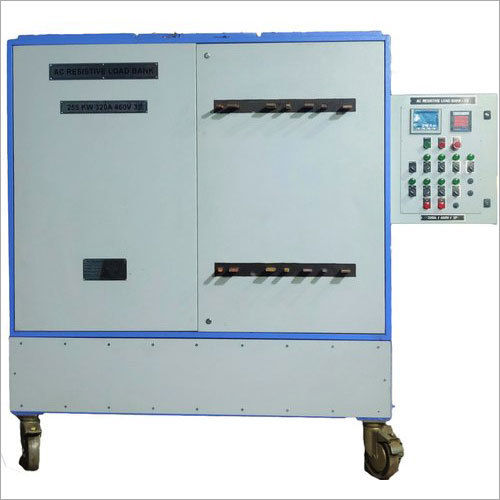
760V-400A-520KW AC Resistive Load Bank
Color : Grey
Material : Mild Steel (Powder Coated)
Power : 520 KW
Product Type : AC Resistive Load Bank
Working Temperature : 10C to +50C
Speed Regulation Method : Other, Manual/Stepper Based
AC Resistive Load Bank
Color : Gray / Custom as Requested
Material : Stainless Steel / Powder Coated Steel
Power : 50 kW 2000 kW (Customizable)
Product Type : AC Resistive Load Bank
Working Temperature : 10C to +55C
Speed Regulation Method : Other, Step or Continuous Manual/Automatic Control
DC Electronic Load Bank
Color : Grey
Material : Powder Coated Steel
Power : 500 W / 1000 W / 2000 W (Available in Multiple Ratings)
Product Type : DC Electronic Load Bank
Working Temperature : 0C to 40C
Speed Regulation Method : Other, Microprocessor Controlled

Contact Details
K-PAS INSTRONIC ENGINEERS INDIA PVT. LTD.
GST : 33AADCK6611R1Z8
- No.16, Mabel Avenue, Sri Sai Nagar Extension, Thoraipakkam, Near Chennai One Toll Gate, Chennai - 600097, Tamil Nadu, India
- Phone :08045477360
 Send Inquiry
Developed and Managed by Infocom Network Private Limited.
